The Oculus Horti Hypothesis 𓇢𓆸
On the Reciprocal Relationship Between Gardening and Drawing
“ Oculus Horti is a deeply interconnected hypothesis exploring the reciprocity between gardening and drawing — and more broadly, between the visual arts and horticulture — in which each practice enhances the other through observation, attention, embodied movement, slowness and creative inspiration.
The Oculus Horti Hypothesis suggests that the more frequently one person, regardless of their age, engages with the act of gardening, the more they are inspired by encountering patterns, textures, colours, and shapes in green spaces. Likewise, the more frequently they engage with drawing, painting, or the visual arts, the more they become attentive to subtle details, becoming a more skilled and responsive gardener. The latter can manifest, for example, in the ability to notice ripening fruit, signs of illness, patterns on leaves indicating different varieties of the same plant, or subtle growth changes.
In a nutshell, gardening and drawing share a reciprocal relationship: nature refines perception (drawing), and art nurtures attentiveness (gardening).
I formulated this hypothesis based on my lived experience. I believe this hypothesis was experienced by many others before me, such as the artist and plantsman Cedric Morris (1889 - 1982). “
The Oculus Horti Hypothesis was formulated by artist and gardener Johanna Tagada Hoffbeck in 2020, and led her to found The Gardening Drawing Club in 2021.
Oculus = Eye // Hortus / Horti = Garden

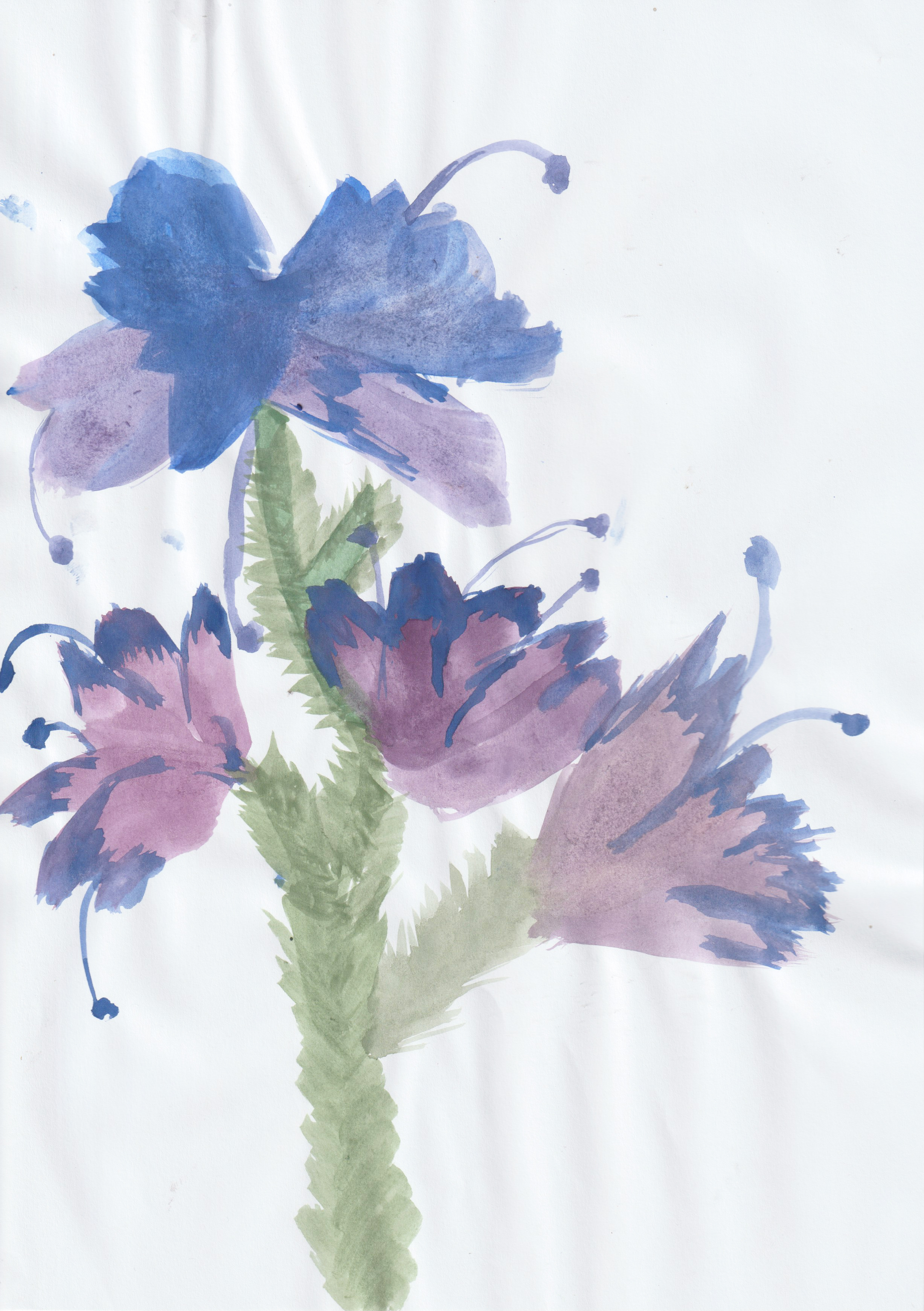


Above: 1. Do not step on the Flwowos (Flowers) at Camden Art Centre (July 2023) - exploring The Gardening Drawing Club at primary school scale. 2, 3 & 4. Children have grown and depicted phacelia flowers, which are annual beloved by pollinators and also beneficial as a green manure.